
Victim Interview Documents Kyle Sandler's Conduct at Federal Prison Tips That Warrants Law Enforcement Scrutiny


Over the past three days, I have published a series of investigative articles examining records, communications, and firsthand accounts connected to Kyle Sandler and Federal Prison Tips. This article is the fourth installment. It incorporates a protected victim interview alongside preserved emails offering guaranteed prison release in exchange for cash, the use of attorney titles inside a legal case management system without any publicly verifiable licensure, continued solicitation of funds after complaints were raised, and a growing number of unrelated complainants reporting materially similar experiences. Taken together, the record raises serious questions about whether consumers were misled about authority, outcomes, and services in exchange for substantial up front payments.
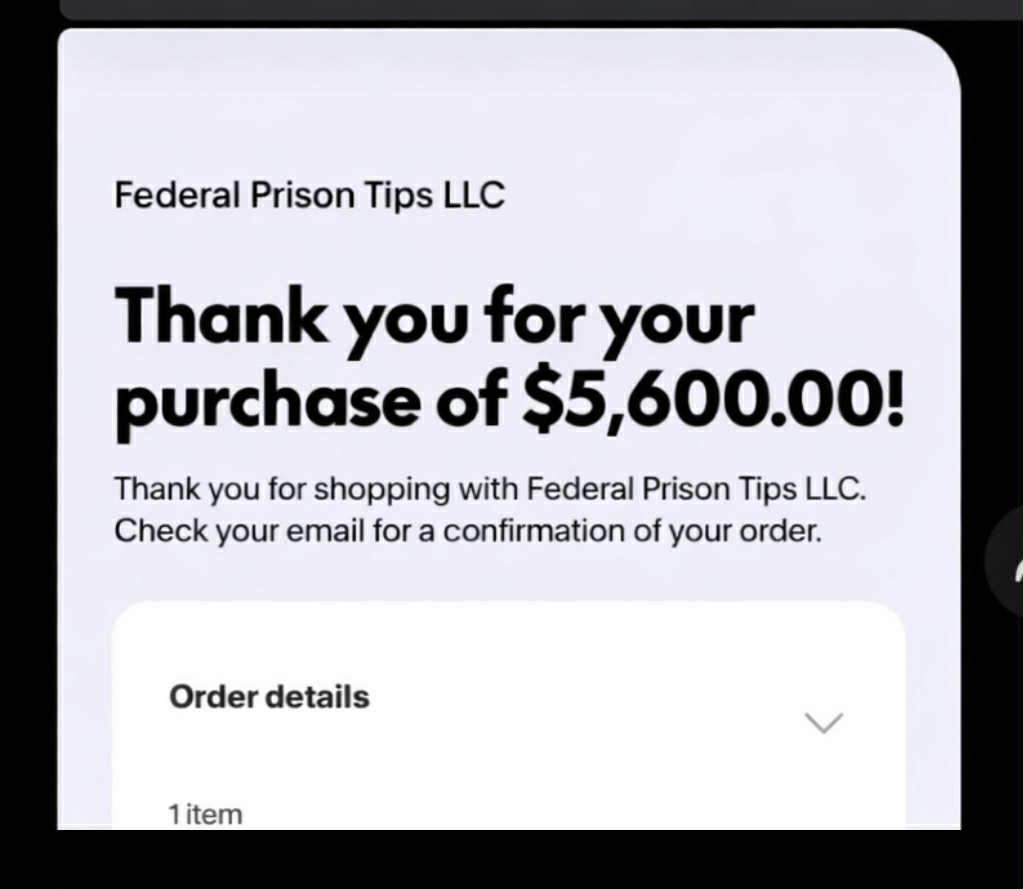
The catalyst for this installment is a woman who requested anonymity due to fear and continued contact from the subject of this reporting. For purposes of this article, she will be referred to as the victim. In a recorded interview, she stated, “I was skeptical from the beginning. It was a lot of money, and I work every day. I have a family to take care of.” Despite that hesitation, she says she paid Federal Prison Tips $5,600 in July after being sold a “Platinum package” marketed as priority assistance for her incarcerated loved one.

The victim explained that prior to payment she never spoke directly with Kyle Sandler. Instead, she communicated with a female representative of Federal Prison Tips who described the “Platinum package” as materially different from other offerings. “That package was sold as priority,” she said. “Direct access. You work with Kyle. That’s what made it different.”
According to the victim, the deciding factor was a written guarantee conveyed to her after the representative stated she had spoken directly with Sandler. That preserved email states that the “Platinum package” came with a guarantee that her loved one would serve “only fifty two percent of his sentence or less,” with additional promises related to early termination of supervised release. The email also emphasized urgency, stating that payment needed to be made immediately to secure the terms and that the price would increase if payment was delayed.
“I have the email,” the victim said during the interview. “It literally says there was a guarantee. That’s what pushed me to do it.”
She paid $5,600 shortly thereafter.
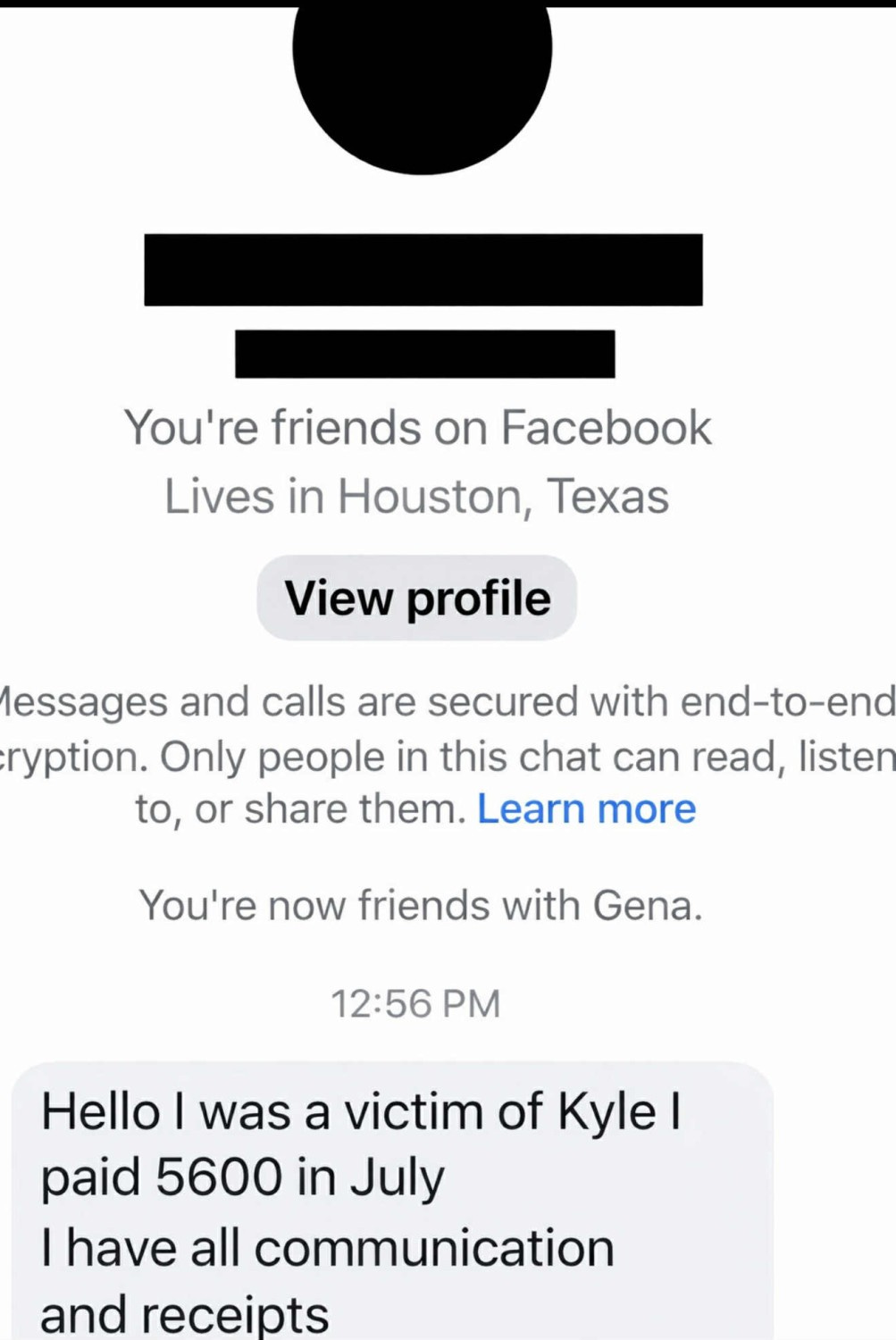
After payment, the victim states that the promised access and responsiveness did not materialize. “My loved one tried to write him from prison,” she said. “He never wrote back. That was one of the guarantees.” She described a steady decline in communication and a pattern of deflection. “It was always, ‘I’m away,’ or ‘call the office,’ or ‘I’ll be back Monday.’”
The victim stated that after the employee she initially worked with no longer appeared to be affiliated with the company, Sandler instructed clients to contact him directly. “He told me I had the Platinum package and that I was good,” she said. “But nothing changed.”
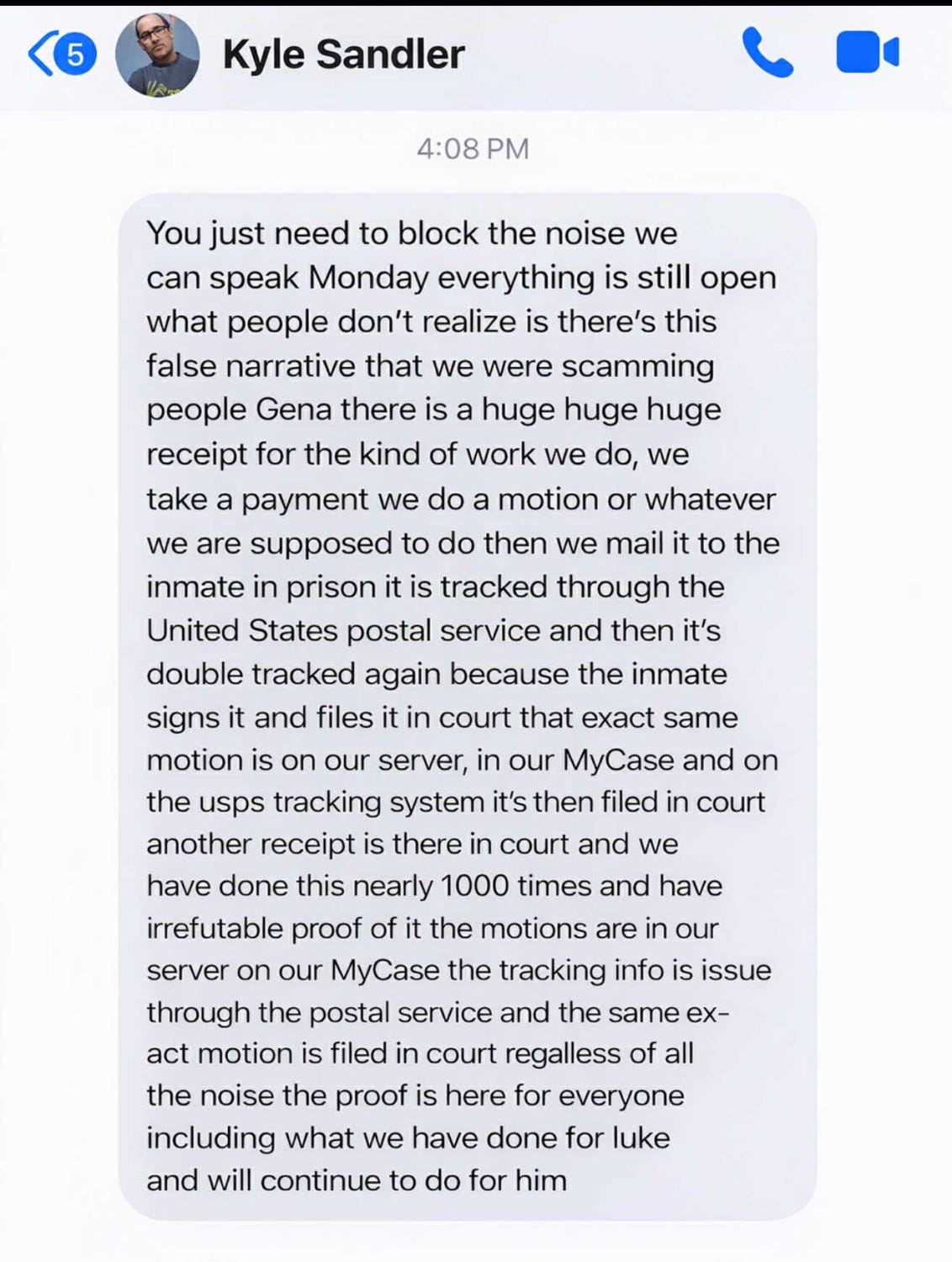
As recently as Friday, even as investigative reporting documenting these issues was being published, the victim stated that Sandler continued corresponding with her. “He kept saying there was a false narrative,” she said. “He talked about everything in general, but never told me what he actually did for my case.” She added, “I didn’t get motions. I didn’t get proof. Just explanations.”
Her experience is not isolated. Since the victim came forward under conditions of anonymity, dozens of unrelated individuals have contacted this publication describing materially similar experiences, several of whom have provided receipts and preserved communications. The consistency of these accounts reflects a recurring pattern of payment, promise, delay, and generalized reassurance.
One preserved email illustrates why the matter has drawn heightened attention. Dated October 25, 2025, the message states:
“With the timing of your sentence I’m willing to guarantee April 30, 2026 $7,500 cash up front. Money back guarantee though.”’s
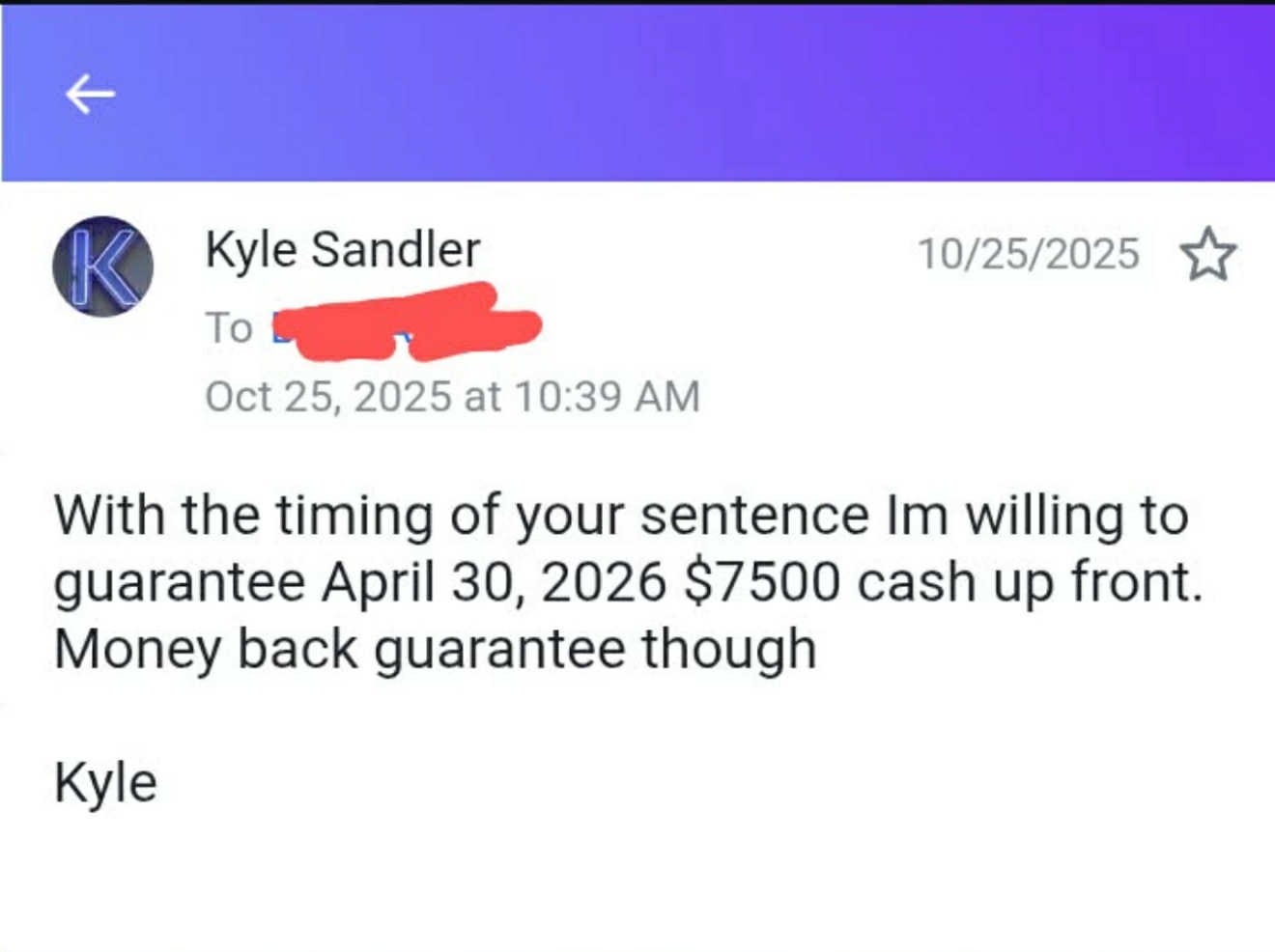
The language of the message is significant. The reference to the timing of a sentence, combined with a date specific guarantee, reflects an assurance of release from prison by April 30, 2026 in exchange for an up front payment. Guaranteeing sentencing outcomes or release from custody is not something non attorneys are permitted to do, and even licensed attorneys generally avoid making outcome guarantees. When such assurances are paired with cash up front demands, they raise serious questions about misrepresentation and authority.
Additional records raise questions about fabrication of Kyle Sandler’s professional credentials. Screenshots from a MyCase client portal associated with Federal Prison Tips show Sandler listed as an “Attorney.”
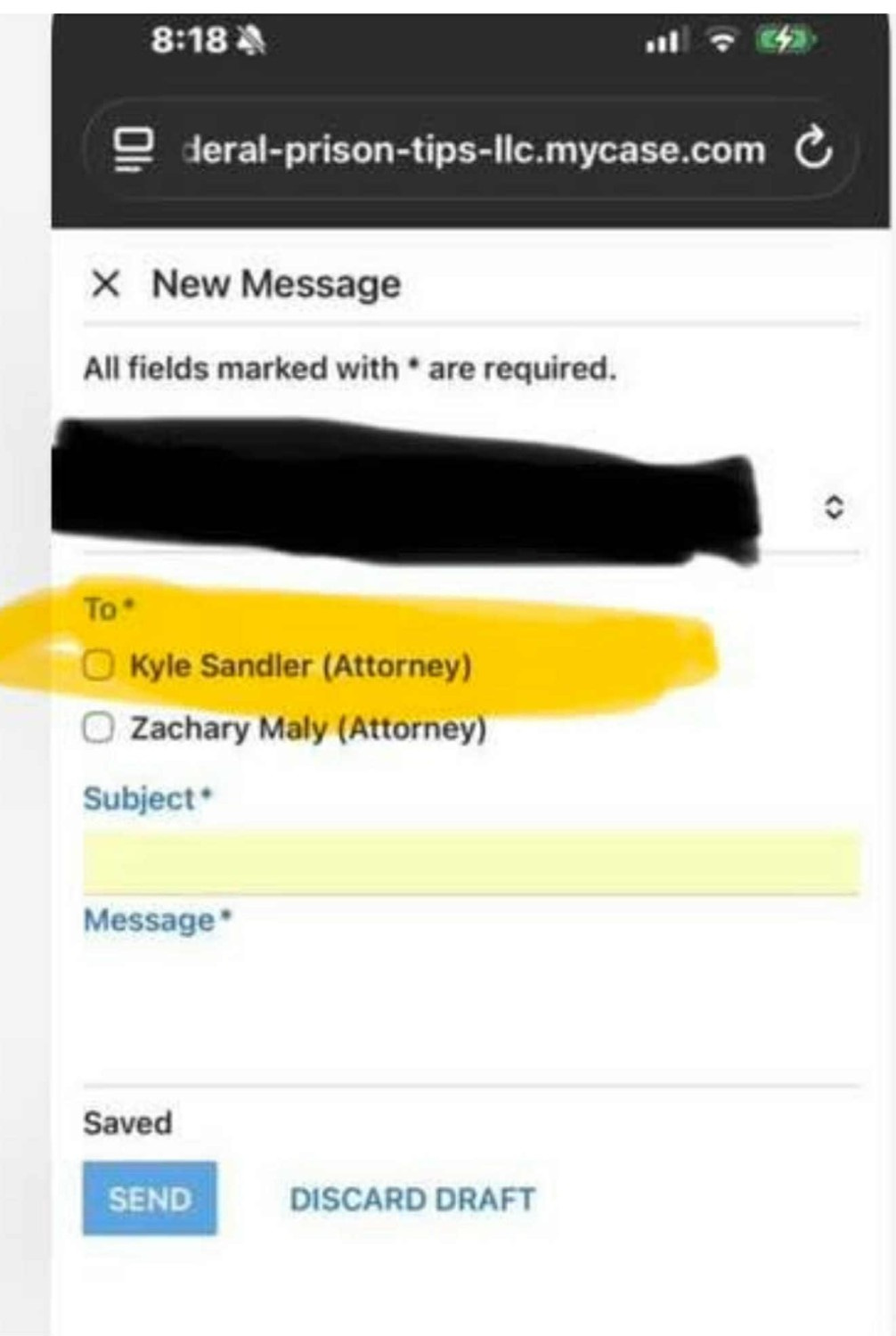
After these issues were raised publicly, Sandler sent the victim a lengthy message attempting to explain the company’s operations. In that message, he asserted that there was a false narrative suggesting people were being scammed and claimed Federal Prison Tips had extensive proof of work performed. He described a generalized process involving payment intake, motion preparation, mailing documents, internal tracking, and storage in MyCase.
From the victim’s perspective, the explanation missed the point. “He talked about how the company works,” she said. “He didn’t show me what he did for me.”
Text messages reviewed by this publication reflect confusion among individuals interacting with Sandler about who controlled the business and who was authorized to act on client matters. During the same period, Sandler’s public facing accounts were restricted or made private.
Former associates have raised related concerns, including claims that professional titles were publicly assigned without authorization and without licensure, and that services lagged while payments continued. Public statements add another layer. In a prior interview, Sandler acknowledged the circulation of a document valuing Federal Prison Tips at five million dollars and claimed approximately 1.5 million dollars in annual revenue. Those assertions now sit alongside court filings alleging default on a revenue purchase agreement and seeking recovery of more than 59,000 dollars, including a personal guaranty executed by Sandler.

No court has made findings of criminal wrongdoing, and Sandler disputes the allegations. But accountability does not begin with conclusions. It begins with preserved records, consistent victim accounts, and discrepancies between promises and performance.
“This isn’t just about the money,” the victim said. “It’s about being taken advantage of when someone you love is at the lowest point of their life.”
This reporting is ongoing. I have been covering this matter continuously, and this article represents the fourth installment. I intend to continue documenting verified developments as they occur and to follow this matter through any formal action taken by regulators, federal investigators, or the courts.
Records do the rest.