
Federal Prison Tips Founder Kyle Sandler Dead Following Catastrophic Brain Bleed

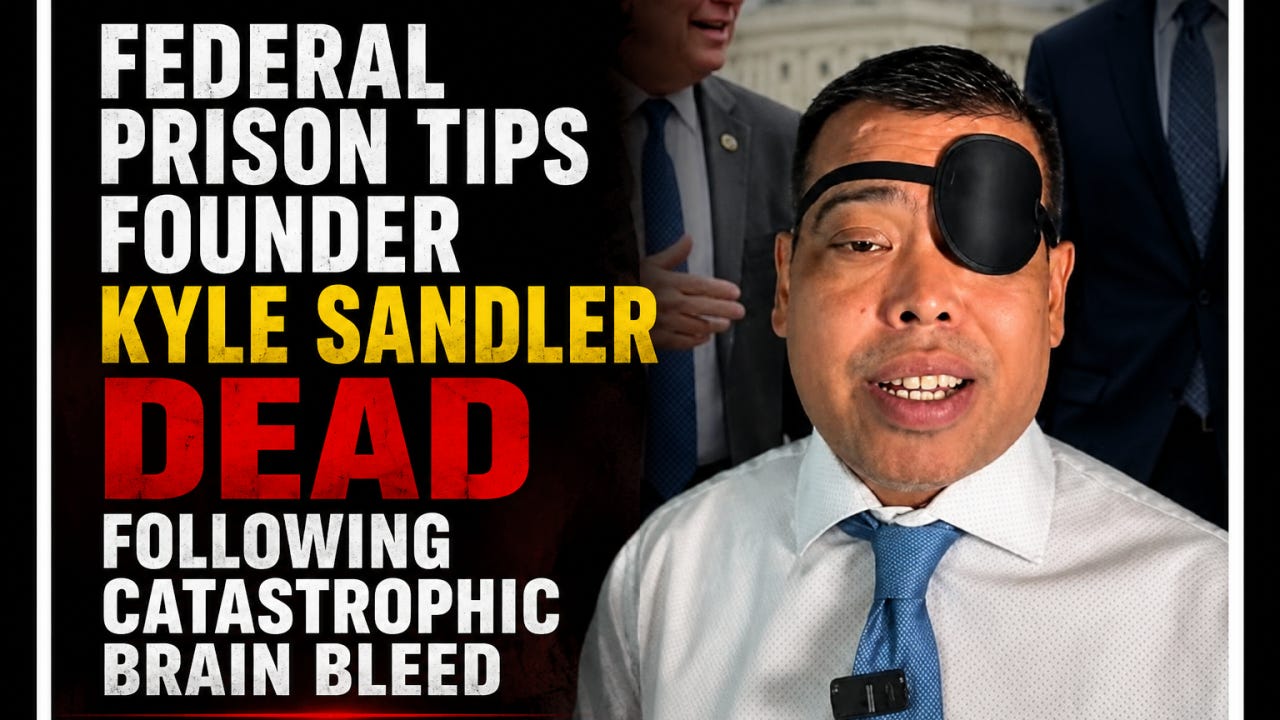
Federal Prison Tips Founder Kyle Sandler Dead Following Catastrophic Brain Bleed

Benjamin Freedland
Host of The Human Intelligence Ledger.
June 22, 2026
When I published my first article about the controversies surrounding Kyle Sandler and his company Federal Prison Tips , I made a promise to readers.
I promised that I would follow the story wherever it led and report on it until the very end.
At the time, few could have predicted how many twists, public disputes, legal battles, personal conflicts, allegations, and unanswered questions would follow. What began as a story about one of the most controversial figures in the federal prison consulting industry evolved into something much larger, drawing in supporters, critics, former clients, prison consultants, advocacy groups, and countless observers who followed every development.
Today, that promise comes full circle.
Kyle Sandler is dead following a catastrophic brain bleed that reportedly left him with no meaningful chance of recovery.
Regardless of where one stood on the debates that surrounded him, this marks the final chapter in a story that captivated supporters, critics, former clients, and members of the broader federal criminal justice community for years.
What follows is not an attempt to settle old scores or relitigate old arguments. Rather, it is an effort to document the conclusion of a story that many people followed from the beginning and one that I committed to covering until its conclusion.
The Medical Emergency
According to individuals familiar with the situation, Sandler had initially been hospitalized after developing complications related to an abscess that required medical treatment and drainage. Following that procedure, sources say he continued to experience significant pain and worsening symptoms, prompting additional medical evaluation and a subsequent surgery at Memorial Regional Hospital in Hollywood Florida.
While recovering from that operation, Sandler unexpectedly suffered a catastrophic brain hemorrhage that was unrelated to the abscess itself. Sources familiar with the events describe a sudden medical emergency that unfolded rapidly and required immediate intervention by hospital staff.

Medical personnel reportedly rushed Sandler into emergency surgery in an attempt to relieve pressure on his brain. Despite those efforts, the extent of the bleeding proved severe. According to individuals with knowledge of the situation, physicians ultimately determined that the injury was nonrecoverable, leaving little hope for meaningful neurological recovery.
Those close to the situation described the development as shocking and devastating. What had begun as treatment for a painful but seemingly manageable medical condition quickly evolved into a life-threatening crisis that few anticipated.
The exact cause of the hemorrhage has not been publicly established. Individuals familiar with the matter have indicated that questions remain regarding whether any underlying medical conditions, prior health complications, or other factors may have contributed to the event. As a result, some aspects surrounding the circumstances of the hemorrhage continue to be discussed among those who followed Sandler’s final months.
According to individuals familiar with the matter, Sandler had previously expressed a desire to be an organ donor. Following the determination that his brain injury was nonrecoverable, plans were made to honor those wishes through the donation of his liver and lungs.
Regardless of the controversies that surrounded much of his public life the donation serves as an opportunity for something positive to emerge from a tragic ending, potentially providing life-saving help to others even as Sandler’s own life came to a close.
Questions That Remain Unanswered
The circumstances surrounding Sandler’s death have already sparked significant discussion among those who followed his life, career, and highly public role within the prison consulting industry.
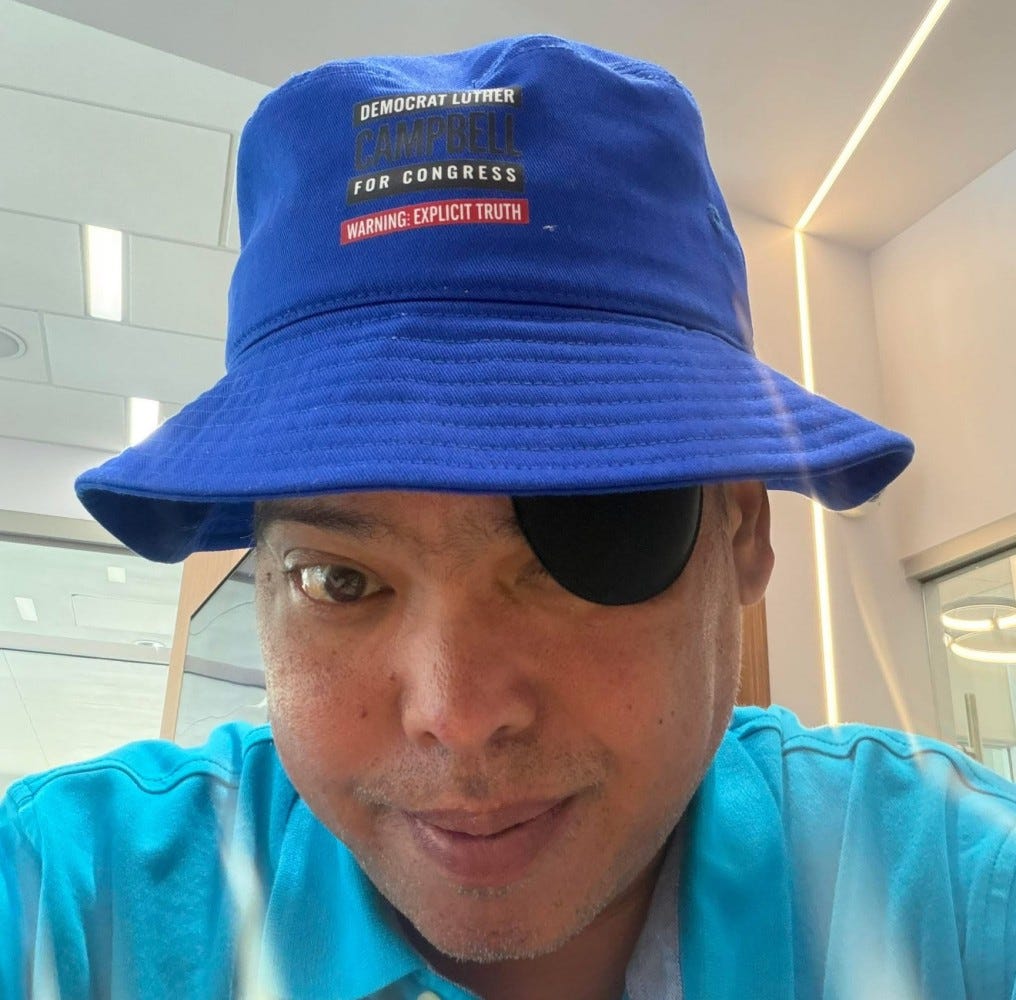
In February, Sandler suffered serious injuries during a physical assault that became the subject of widespread attention and debate within the prison consulting community. In the months that followed, Sandler publicly discussed injuries he attributed to the incident, including vision loss that reportedly left him blind in one eye. He subsequently began wearing an eye patch and also spoke about a minor brain hemorrhage that he said resulted from the attack.
Given those previously reported injuries, some observers have questioned whether the February assault could have played any role in the catastrophic brain hemorrhage that ultimately led to his death.
At this time, however, no medical examiner, law enforcement agency, forensic pathologist, or other official authority has publicly concluded that the February incident contributed to the brain bleed that claimed Sandler’s life.
That distinction is important.
While questions have been raised by individuals familiar with the situation, questions are not evidence, and speculation is not a finding of fact.
Whether any connection exists between the February assault and the fatal hemorrhage remains unknown.
According to individuals familiar with the matter, a forensic autopsy is expected to be conducted. Any determination regarding the cause of the hemorrhage, contributing medical factors, or potential links to prior injuries will ultimately depend upon the findings of medical examiners, forensic specialists, and any investigative agencies involved in reviewing the case.
Until those findings are complete, any assertion that the February assault either caused or contributed to Sandler’s death would be premature.
For now, the known facts remain limited, and the unanswered questions surrounding the tragedy await official medical and forensic review.
Larry Levine’s Perspective
One individual who has followed many of the controversies surrounding Sandler over the years is Larry Levine founder of Wall Street Prison Consultants and one of the most recognized names in the federal prison consulting industry.
When asked whether individuals involved in a prior altercation should be concerned when someone later dies, Levine offered a simple observation.
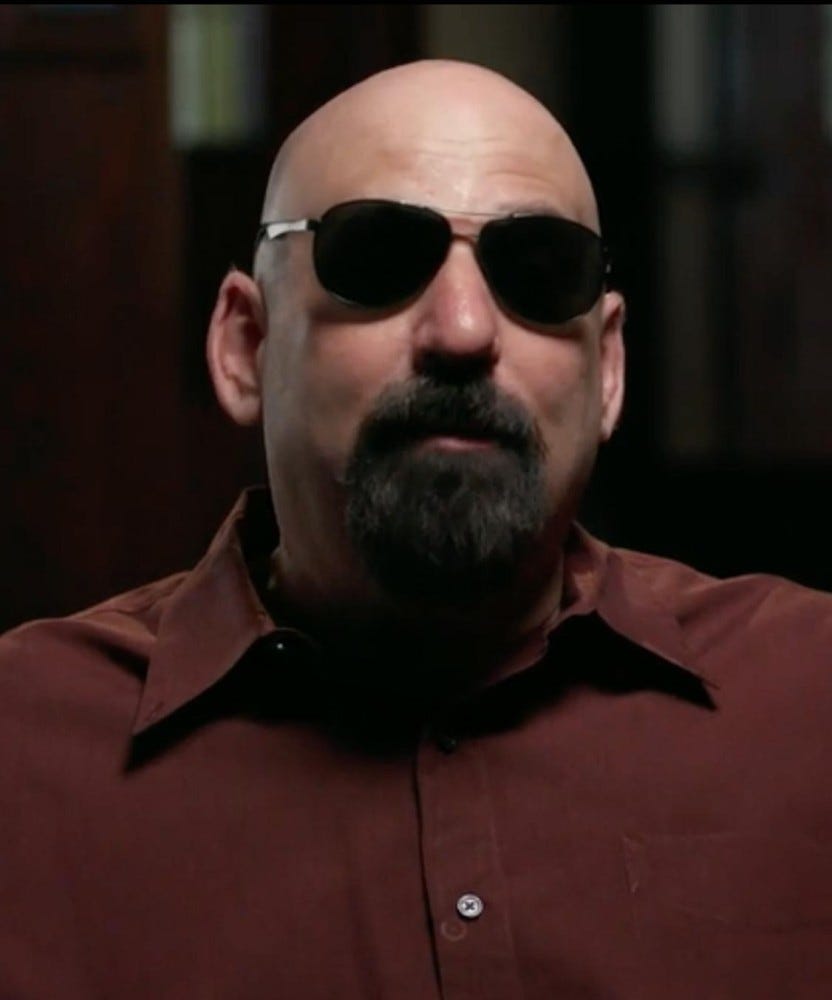
“Anyone who was involved in any type of altercation with someone who later died should be concerned. That’s only common sense.”
Levine did not accuse any specific individual of wrongdoing.
Rather, he was speaking to a broader reality: when a person dies after a previously reported physical confrontation, questions naturally follow.
Those questions may or may not ultimately lead anywhere.
The facts will be determined by evidence, not opinion.
A Polarizing Figure
Few people in the federal prison consulting industry generated stronger reactions than Kyle Sandler.
Before entering the prison consulting world, Sandler was convicted in a widely publicized federal wire fraud case stemming from Opelika, Alabama.
Federal prosecutors alleged that Sandler falsely portrayed himself as a successful Google executive and technology entrepreneur, using those representations to persuade members of the community to invest substantial sums of money into a business venture that prosecutors argued was not viable from its inception. According to court records, investors collectively lost millions of dollars.
The case drew national attention and later became the subject of an episode of the HBO documentary series Generation Hustle, which examined individuals accused of using deception, manipulation, and fabricated success stories to build personal wealth and influence.
Federal authorities ultimately secured Sandler’s conviction on wire fraud charges, resulting in a prison sentence of approximately six years. Following his release, Sandler later faced additional legal consequences related to fraud-related conduct.
For many observers, the Alabama fraud case remained one of the defining chapters of Sandler’s life. While he would later reinvent himself as a federal prison consultant and build a substantial online following through Federal Prison Tips, critics frequently pointed to his criminal history as a reason for skepticism. Supporters, meanwhile, viewed his experience as giving him unique insight into the federal prison system.
Regardless of perspective, the fraud case that first brought Sandler national attention would continue to follow him for the remainder of his life.

That history would follow him into the next chapter of his life.
After prison, Sandler founded Federal Prison Tips, a consulting and media platform aimed at individuals facing federal charges, incarcerated people, and their families. Through social media, videos, podcasts, and consulting services, he became one of the most recognizable figures in the federal prison consulting industry.
To supporters, he was someone who had lived through the federal system and was sharing hard-earned lessons with others.
To critics, he represented something entirely different.
Critics argued that Sandler built a business model around selling hope to people facing some of the most desperate moments of their lives. Former clients and detractors accused him of creating expectations that could never realistically be guaranteed. Among the most frequent complaints were allegations that he implied he could help secure favorable outcomes, influence decisions, or assist with clemency efforts despite having no authority to guarantee any such result.The circumstances surrounding Sandler’s death have already sparked significant discussion among those who followed his life, career, and highly public role within the prison consulting industry.
Many of those individuals claimed they paid substantial sums of money for consulting services only to later be abandoned, ignored, or disappointed by what they received in return. Some alleged that communication stopped after payment was made. Others accused him of overpromising what was possible within a system where no consultant can control prosecutorial decisions, judicial rulings, Bureau of Prisons actions, or presidential clemency determinations.
As criticism surrounding Federal Prison Tips intensified and victems started speaking out, Sandler reportedly drew the attention of federal investigators. According to individuals familiar with the matter, the Federal Bureau of Investigation (FBI) reviewed allegations concerning the business and interviewed multiple individuals who had raised complaints or claimed to have knowledge of its operations.
The precise scope of any federal inquiry was never publicly disclosed, and no criminal charges related to those allegations were filed against Sandler prior to his death.
With Sandler’s passing, any potential investigation centered on his personal conduct is now unlikely to result in criminal prosecution. Under longstanding legal principles, criminal liability does not survive the death of a defendant. As a practical matter, that means many of the questions that critics hoped would be answered through a federal investigation may never receive a definitive resolution in a courtroom.
Whether investigators ultimately reached any conclusions may never become public. What is clear is that Sandler’s death closes the door on any future criminal prosecution against him and leaves many of the allegations, criticisms, and unanswered questions surrounding Federal Prison Tips unresolved.
Over the years, Sandler found himself embroiled in public disputes with former associates, competitors, critics, former clients, and even some former supporters. Arguments that might have remained private frequently spilled into public view. Social media battles became commonplace. Professional relationships often deteriorated into open conflict.
What emerged was a reputation unlike almost anyone else in the industry.
Very few people were neutral about Kyle Sandler.
Some viewed him as an advocate who used his experiences to help others navigate incarceration.
Others viewed him as a controversial figure whose business practices generated years of complaints, criticism, and distrust.
Complicating the story further was Sandler’s declining health. Friends, associates, supporters, and critics alike watched as he continued working despite serious medical challenges. Even as his physical condition reportedly worsened, he remained active online and continued operating his business.

In the end, Kyle Sandler left behind a legacy that remains deeply contested.
Few figures in the federal prison consulting world inspired as much loyalty, anger, admiration, criticism, controversy, and debate as Kyle Sandler.
Whether remembered as a helper, a salesman, a survivor, a promoter, a conman, a liar, or some combination of all of those descriptions, one fact is difficult to dispute:
Kyle Sandler was a figure people rarely ignored.
He built a following, attracted both supporters and critics, and remained a polarizing presence until the very end. Few people who encountered him came away without a strong opinion, and even fewer remained indifferent to the controversies that seemed to follow him throughout much of his life.
The Legacy of Federal Prison Tips
Regardless of one’s opinion of Sandler, there is little question that Federal Prison Tips became one of the most recognizable brands within the prison consulting space.
The platform attracted thousands of followers and became a source of information, commentary, and discussion for individuals affected by the federal criminal justice system. For many people facing federal charges, preparing to surrender to prison, or attempting to navigate reentry, Federal Prison Tips was often one of the first resources they encountered.
Many individuals learned about prison designation, custody classifications, halfway houses, RDAP, supervised release, and reentry through content produced under the Federal Prison Tips banner.
Others challenged the accuracy of some of those claims and questioned aspects of the business itself. Critics accused Sandler of overstating what could realistically be accomplished on behalf of clients and argued that vulnerable people facing incarceration were sometimes left with expectations that could never be guaranteed.
Those debates are likely to continue long after Sandler’s death.
What cannot be disputed is that he succeeded in making himself a central figure within a niche industry that rarely receives mainstream attention.
That reality became especially apparent in the final days of his life.
After suffering a catastrophic brain hemorrhage during his recovery from surgery, Sandler’s condition reportedly deteriorated rapidly. According to individuals familiar with the situation, physicians ultimately determined that the injury was unsurvivable and that there was no reasonable expectation of recovery.
As news of his condition spread, an individual assisting with Federal Prison Tips issued a public statement announcing the immediate end of the business.
The statement read in part:
“It is with great sadness that we share that Kyle Sandler, owner of Federal Prison Tips, recently suffered a severe stroke and is currently in a coma. Medical professionals have advised that there is no expectation of recovery.”
The announcement went on to state that Federal Prison Tips would cease all business operations effective immediately and would no longer provide consulting services.
Perhaps most notably, the statement advised former customers that there was no remaining administrative staff or operational infrastructure available to process refunds, charge disputes, or reimbursements for prior services.
For some supporters, the announcement was viewed as a tragic and abrupt ending to a business that had occupied much of Sandler’s post-prison life.
For others, particularly former critics and dissatisfied customers, the statement immediately raised questions about unresolved obligations, pending services, and financial matters that now appeared unlikely to be addressed.
The same controversies that had followed Sandler throughout much of his career did not disappear with his hospitalization. Instead, they became part of the conversation surrounding the sudden collapse of the company he had spent years building.
The statement concluded by directing individuals seeking prison consulting assistance to Kent Consulting Group LLC and asking for privacy and compassion for Sandler’s family during the crisis.
In many ways, the announcement marked the end of a long and controversial chapter in the prison consulting industry.
Whether viewed as an advocate, entrepreneur, educator, salesman, or critic of the system, Kyle Sandler built a platform that became impossible to ignore. Even those who strongly disagreed with him often found themselves responding to him, debating him, criticizing him, or competing against him.
Few figures in the federal prison consulting world generated as much attention, controversy, loyalty, criticism, and discussion as Kyle Sandler.
And even after his death, those conversations are unlikely to end.
For those who followed the controversies, the lawsuits, the online disputes, the public feuds, and the endless arguments, Sandler’s death represents a moment of finality.
The livestreams have ended.
The social media battles have largely fallen silent.
The voice behind Federal Prison Tips is gone.
What remains are memories, opinions, unanswered questions, and a legacy that different people will interpret in very different ways.
Some will remember him as an advocate.
Some will remember him as a controversial entrepreneur.
Some will remember him as both.
History often has a way of simplifying complicated people.
Kyle Sandler was not a simple person.
His life generated strong reactions, strong emotions, and strong opinions.
Even in death, those reactions continue.
For better or worse, Kyle Sandler left a lasting mark on the federal prison consulting world.
And even now, people are still talking about him.
The story that began years ago has finally reached its conclusion.
As promised, this is the end.