
Before Waco and Ruby Ridge, There Was the Singer Swapp Standoff: Former ATF Special Agent Frank Ortiz Recalls the 1988 Federal Siege

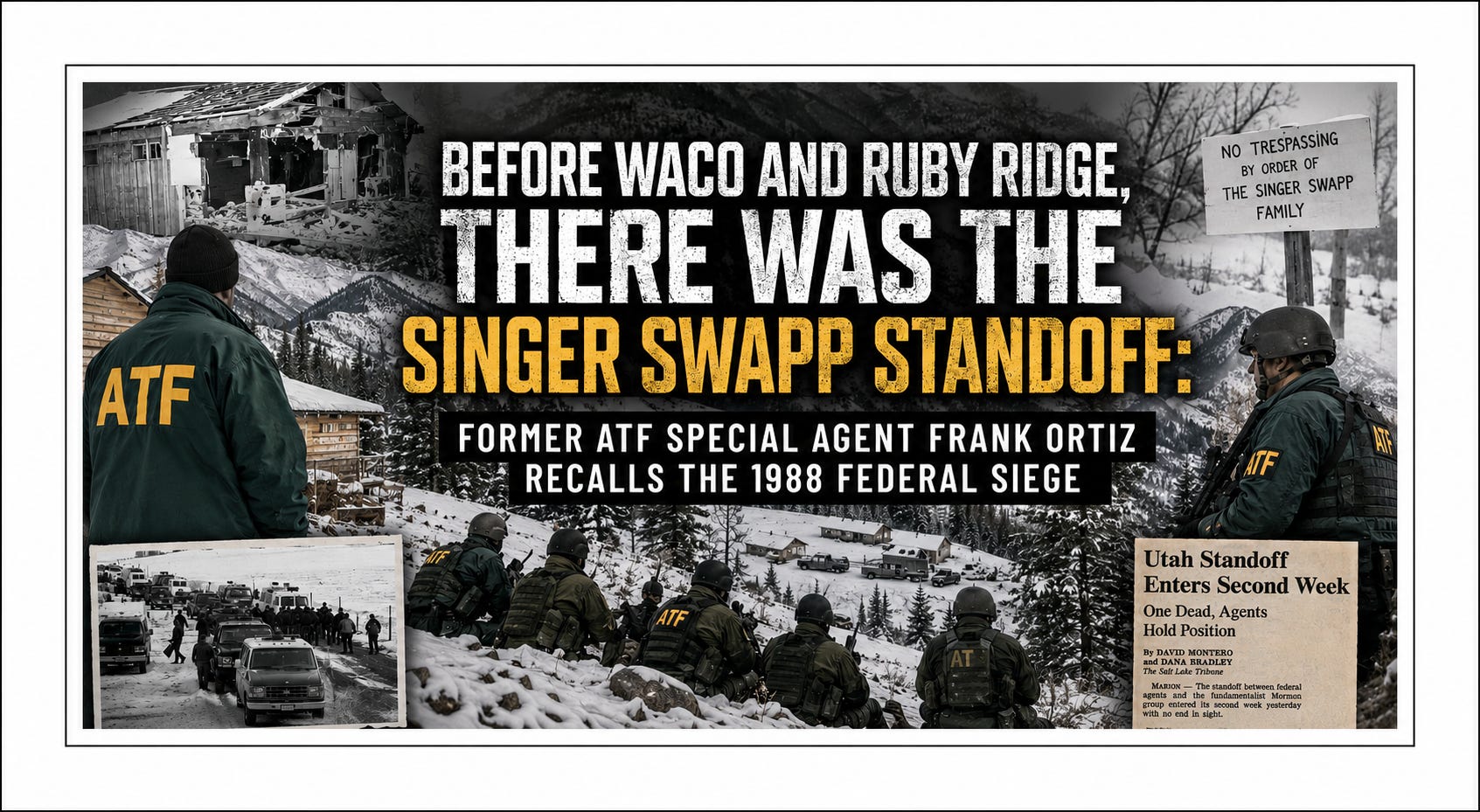
Long before Waco became synonymous with federal standoffs and years before Ruby Ridge entered the American consciousness, another violent confrontation unfolded in the mountains of Utah, one that many outside federal law enforcement have largely forgotten.
In 1988, a heavily armed fundamentalist polygamist group engaged federal authorities in what would become the longest federal standoff in United States history at the time. For fourteen days, ATF agents, FBI Hostage Rescue Team operators, United States Marshals Service , and other federal personnel fought freezing temperatures, darkness, mountainous terrain, and sustained gunfire in Marion, Utah during what became known as the Singer Swapp Standoff.
Among the agents there was former ATF Senior Special Agent Frank Ortiz.
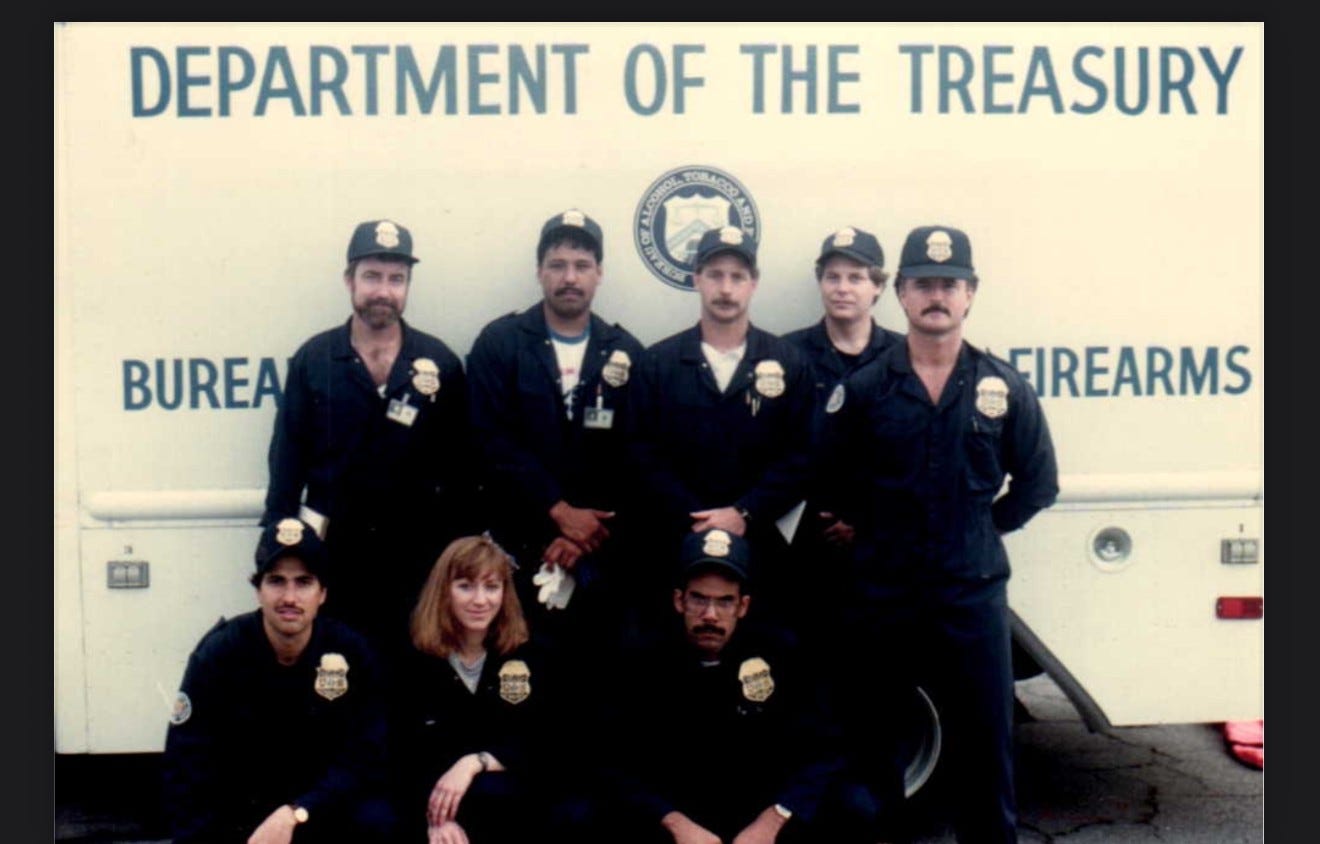
Today, Ortiz speaks about the standoff with the calm humility that defines many seasoned investigators who have seen violence firsthand. There is no bravado in his voice. No attempt to sensationalize what happened. Only memory.
“It was a battle,” Ortiz told The Human Intelligence Ledger.
The origins of the Singer Swapp conflict stretched back years before the siege itself. The Singer family, along with members of the Swapp family and other followers of a radical fundamentalist Mormon ideology, had become increasingly hostile toward both the federal government and the mainstream Church of Jesus Christ of Latter day Saints. They rejected federal authority entirely and believed violence was justified in defending their interpretation of religious doctrine.
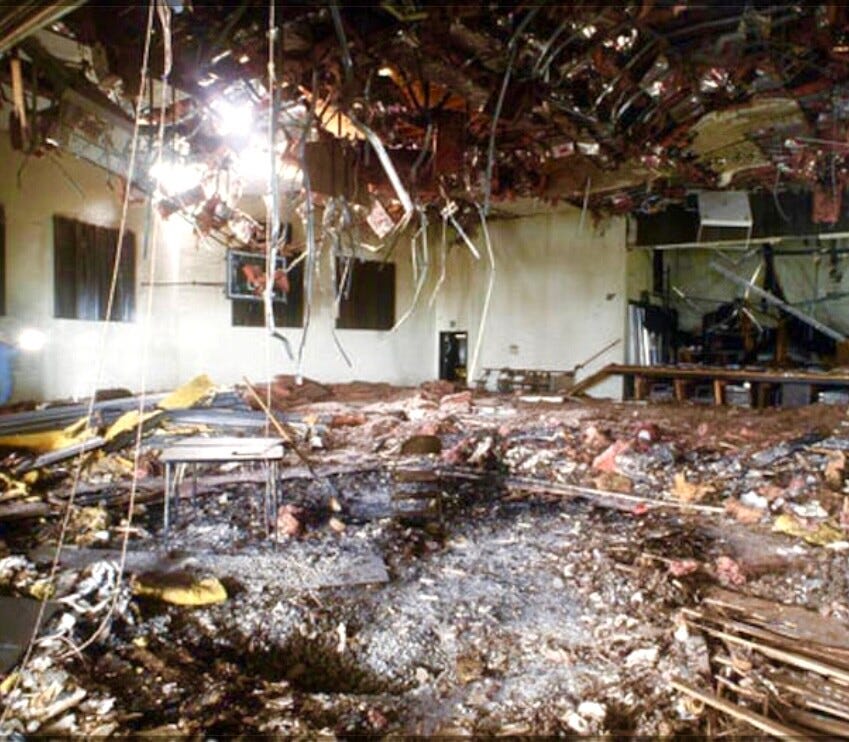
Tensions escalated dramatically in January of 1988 when a Latter day Saints meetinghouse in Marion, Utah was destroyed in a massive bombing. According to investigators, the perpetrators packed the church with more than eighty sticks of dynamite, creating an explosion so powerful it ripped apart much of the structure and shook surrounding communities.
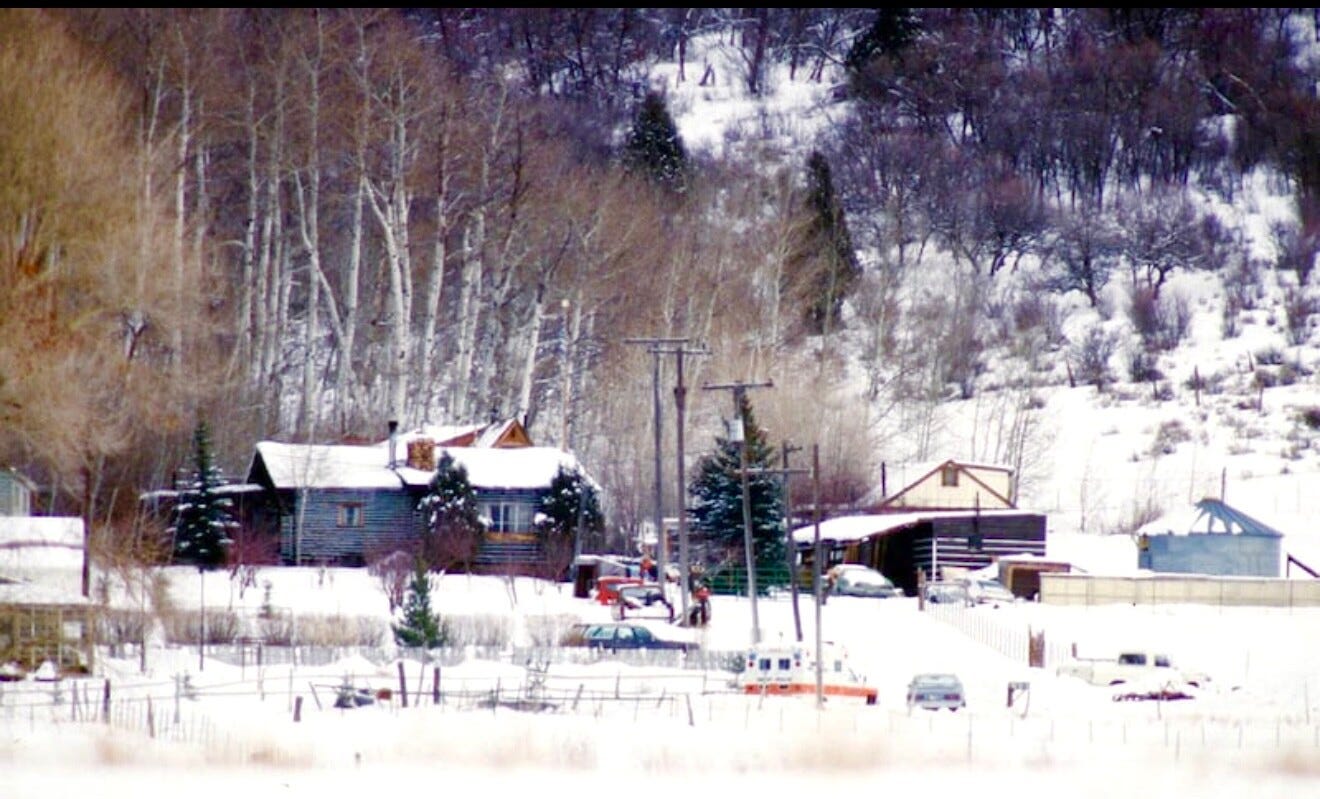
Federal authorities quickly identified members of the Singer-Swapp group as suspects. Warrants were issued. But instead of surrendering peacefully, the group fortified itself inside a remote cabin compound high in the mountains near Marion.
“It was the middle of winter,” Ortiz recalled. “Foot to a foot and a half of snow on the ground. Below freezing. They were heavily armed with over 30,000 rounds of ammunition.”
The compound sat in rugged terrain that made movement extremely dangerous for federal personnel. Deep snow, freezing temperatures, poor visibility, and elevated firing positions all favored the barricaded suspects. Federal agents understood almost immediately that this would not be a routine arrest operation.
As agents attempted to establish containment around the property, sporadic gunfire erupted. According to Ortiz, most of the engagements occurred during darkness.
“Most of the shooting took place during the nighttime,” he said. “And in winter there’s very little light in those mountainous regions. You’d see the flashes first, then hear the rounds striking around you.”
The firefights intensified over the following days.
Ortiz vividly remembers the physics of gunfire under stress.
“The bullets that kill you, you never hear,” he said. “That’s true. They’re moving faster than sound. You hear the impacts before you hear the crack.”
The group inside the compound was heavily armed and tactically prepared. Investigators later learned they possessed rifles, large quantities of ammunition, improvised explosive materials, and fortified defensive positions around the property. Federal agents, meanwhile, found themselves operating in difficult conditions with far fewer tactical resources than modern law enforcement agencies possess today.
Ortiz says the culture inside federal law enforcement at the time was dramatically different from what exists now.
“Tactical planning back then was minimal,” he explained. “Guys didn’t even believe in wearing body armor. Some agents thought you weren’t a real man if you wore a vest.”
Ortiz purchased his own ballistic vest early in his career because many agents still relied on outdated Vietnam era flak jackets or no protection at all.
At one point during the standoff, an observation post occupied by federal agents came under heavy fire and risked being overrun. Ortiz’s supervisor ordered him to assemble a rescue element and move directly into the active kill zone.
“My boss told me, ‘You’re the lead. Pick five guys and go rescue them.’”
Armed with M16 rifles, Ortiz and his team advanced under incoming gunfire toward the trapped agents.
“We grabbed our rifles and went out there under fire and brought them back,” he said. “It was combat.”
The political environment surrounding the operation added another layer of complexity. Utah Governor Norman Bangerter reportedly instructed authorities repeatedly that members of the group were not to be killed if at all possible, creating significant operational restraint during active firefights.
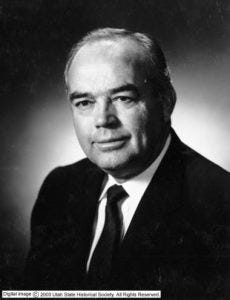
“There were times we probably could have ended it,” Ortiz explained. “But we were told to hold our fire.”
Those restrictions, Ortiz believes, may have contributed to tragedy.
On January 16, 1988, ATF Special Agent and canine handler Fred House was fatally shot during the standoff. House had only recently arrived on scene.
Ortiz remembers meeting him shortly before the shooting.
“I shook his hand that morning,” Ortiz said quietly. “He had three daughters like I did.”
House’s death sent shockwaves through the federal law enforcement community and hardened the seriousness of the operation. The standoff had already become one of the most dangerous domestic confrontations federal agents had faced in years.
As the siege dragged into its second week, negotiators attempted repeatedly to convince members of the compound to surrender peacefully. Federal authorities tightened containment while tactical teams prepared for the possibility of a full scale assault if negotiations collapsed.
But ultimately, the resolution came not through an overwhelming assault, but through exhaustion, pressure, and negotiation.
After fourteen days of isolation, freezing temperatures, mounting tactical pressure, and the realization that escape was impossible, members of the Singer-Swapp group began surrendering one by one. The final holdouts eventually emerged from the cabin and were taken into custody without the catastrophic bloodshed many feared.
Several members of the group were later convicted on charges related to the church bombing, weapons offenses, and the death of Agent House.
For federal law enforcement, however, the Singer-Swapp Standoff became more than just another case. It became a warning.
Years later, many of the tactical lessons learned in Marion would directly influence federal operational planning at Ruby Ridge and Waco, though not always successfully. Agencies began reevaluating perimeter containment, negotiation strategy, intelligence sharing, rules of engagement, and interagency command structures.
The psychological impact on the agents involved remained long after the siege ended.
“We didn’t get medals,” Ortiz said. “We got told, ‘Thanks a lot, now get back to work.’”
Ortiz openly acknowledges suffering from post traumatic stress following the incident.
“I remember coming home to my wife and daughters and feeling like I was play acting,” he said. “When you’ve been under that kind of stress, normal life almost feels unreal.”
For Ortiz, the operation was not simply about tactics or gunfire. It was about leadership, humility, and responsibility under pressure.
“Humility is number one,” he said during our conversation. “You’ve got to check your ego at the door because ego destroys investigations.”
That philosophy would later define his work on terrorism investigations, organized crime cases, and high level confidential source handling throughout his decorated ATF career.
But the Singer Swapp Standoff remains one of the clearest windows into the reality many federal agents faced during that era, long before body cameras, modern tactical doctrine, and widespread public scrutiny reshaped federal operations.
It was raw. Chaotic. Dangerous.
And for many who survived it, unforgettable.
Today, the incident exists mostly as a footnote in American law enforcement history. Overshadowed by larger and more publicized federal confrontations, the 1988 Singer Swapp Standoff is rarely discussed outside specialized circles.
Yet for the agents who were there, the memories never left.
“It was a battle,” Ortiz repeated.
“And battles leave scars long after the shooting stops.”